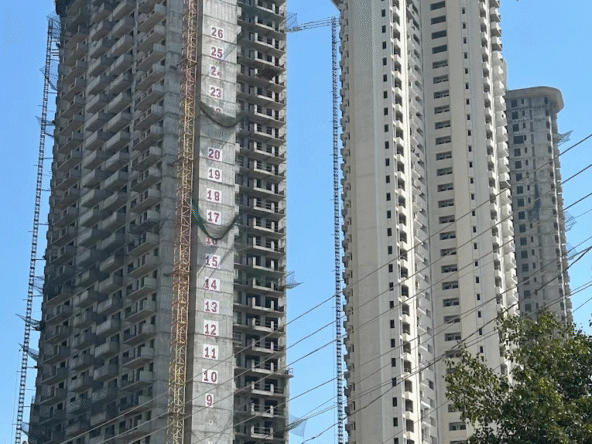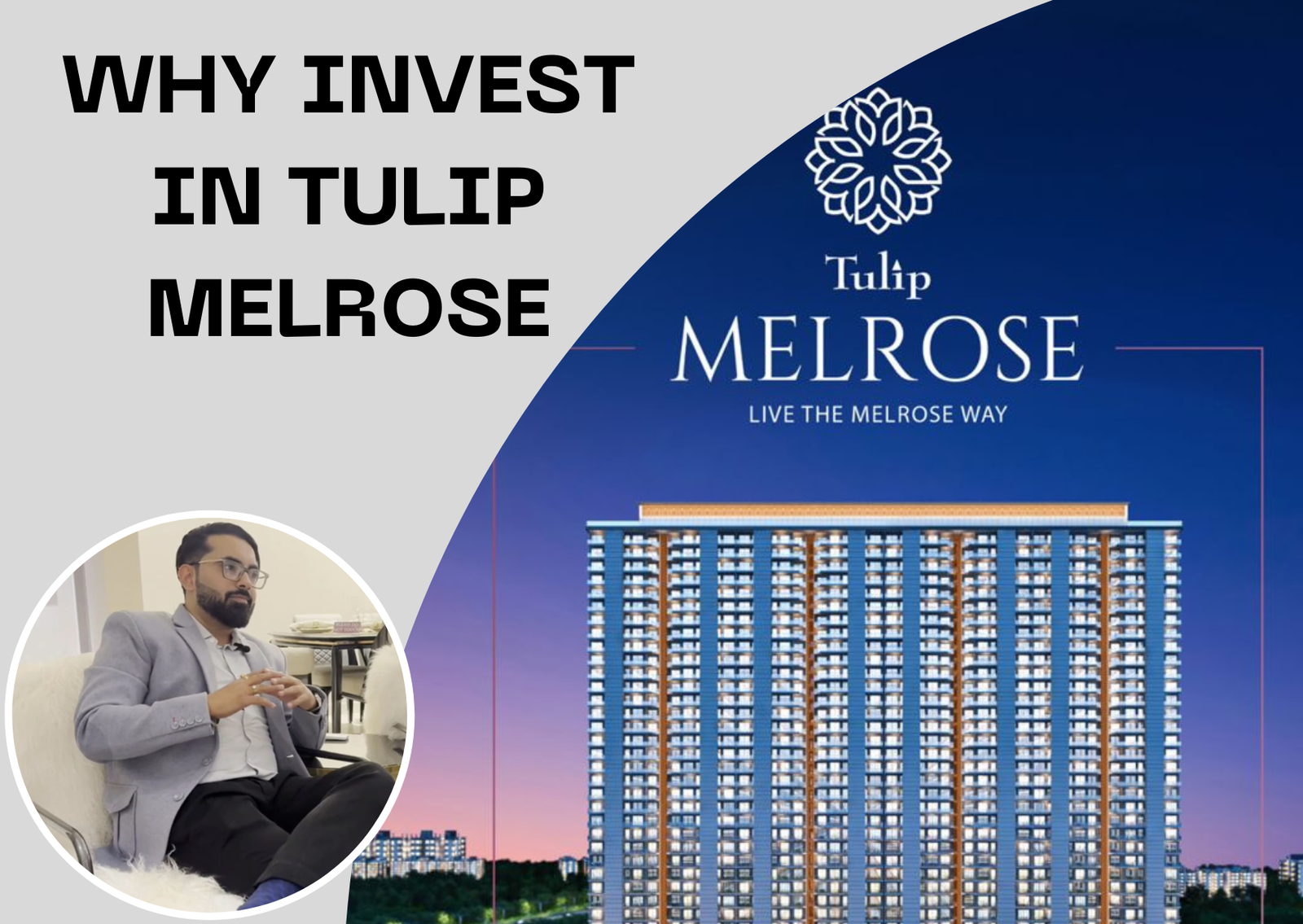
When buyers look at luxury real estate in Gurgaon today, the first question is no longer “Is this project premium?”
The real question is: Will it grow in value over the next 5–10 years?
That is where the discussion around Tulip Melrose becomes important.
Located in Sector 70 along Southern Peripheral Road (SPR), Tulip Melrose sits inside one of the fastest-transforming corridors of Gurgaon. But does that automatically make it a strong long-term investment? Not necessarily. A serious investor must evaluate:
- Infrastructure growth
- Price cycle position
- Supply vs demand
- Rental potential
- End-user profile
- Risk factors
Let’s break it down in a practical, data-driven, no-fluff way.
1. Understanding the Micro-Market: Why SPR Matters
Tulip Melrose is located on Southern Peripheral Road, often called SPR Road. This stretch connects:
- Golf Course Extension Road
- Sohna Road
- NH-48 (Delhi–Jaipur Highway)
- Upcoming metro connectivity
- Dwarka Expressway via internal networks
Why SPR Is Important for Long-Term Holding
In real estate, infrastructure defines appreciation. SPR has seen:
- Road widening
- Flyover developments
- Improved signal systems
- Commercial developments
- Luxury residential launches
Historically in Gurgaon, areas that move from “under development” to “fully functional connectivity zones” see major price jumps.
Golf Course Road was once similar. So was Dwarka Expressway.
SPR is currently in the transition phase — which is usually the most profitable phase for long-term investors.
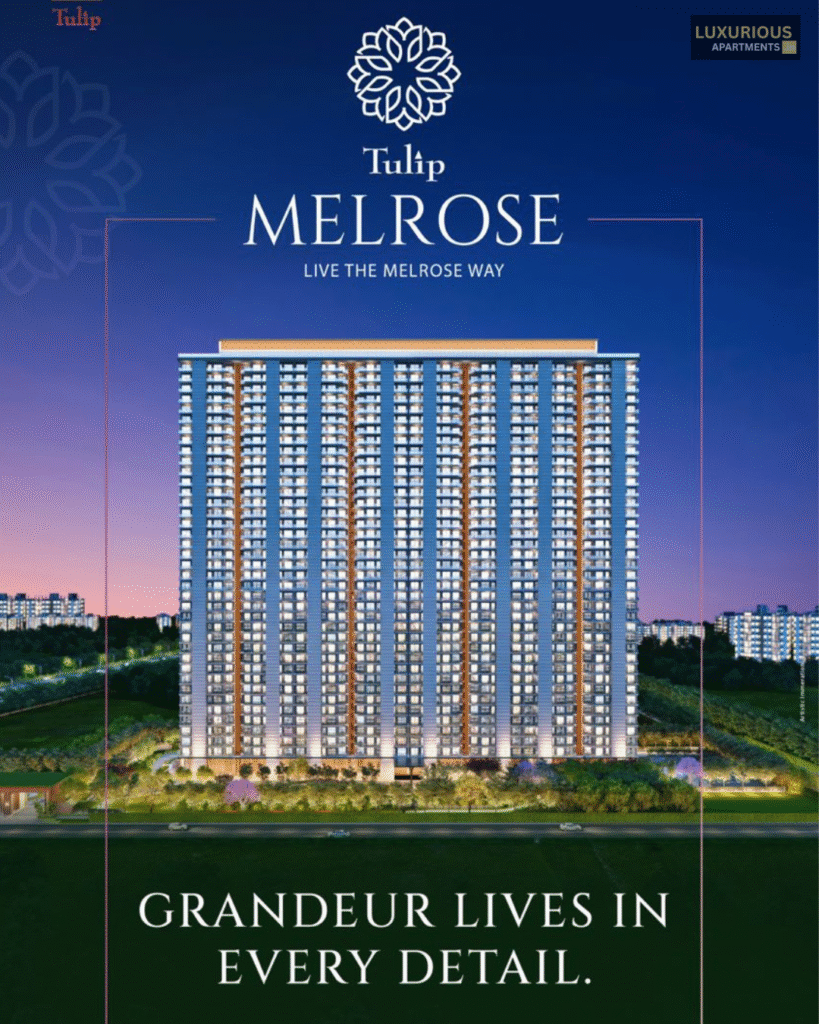
2. Where Is the Gurgaon Price Cycle Today?
The Gurgaon luxury market has already seen a sharp price increase in the past 3–4 years. But here is what matters:
- Demand for premium homes has shifted from mid-income buyers to high-net-worth and upper middle-class families.
- Corporate expansions in Gurgaon continue.
- NRI interest has increased.
- Inventory absorption in premium projects has been strong.
But price growth will now be more selective.
Not every project will appreciate equally.
Projects that combine:
- Strong location
- Limited competition
- Larger unit formats
- End-user appeal
…will outperform.
Tulip Melrose fits into the ultra-premium, low-density high-rise category in Sector 70 — and that reduces direct competition risk.
3. Capital Appreciation Forecast (5–10 Year View)
Let’s think like a long-term investor.
Short Term (0–2 Years)
In the short term:
- Appreciation may be moderate.
- Price movement may depend on possession timeline.
- Broader Gurgaon sentiment will influence demand.
If bought at early launch stages, short-term gains are usually better.
Medium Term (3–5 Years)
This is where SPR’s infrastructure completion will matter most.
As:
- Metro expansion becomes visible
- Commercial activity increases
- Retail ecosystem grows
Property values typically re-rate upward.
Projects in operational, well-connected corridors generally move to the next pricing bracket.
Long Term (5–10 Years)
In long holding periods:
- Location maturity drives premium.
- Limited luxury supply increases value.
- Rental yields improve.
- Secondary market liquidity improves.
If SPR becomes fully comparable to Golf Course Extension Road in infrastructure quality, then capital appreciation potential remains strong.
4. Rental Potential: Realistic Expectations
Now let’s address a practical investor doubt:
“Can I generate strong rental income from Tulip Melrose?”
Who Would Rent Here?
Given its positioning, likely tenant profiles include:
- Senior corporate executives
- CXO-level professionals
- NRIs returning temporarily
- Business families
- Expats working in Gurgaon
Rental Yield Reality
Luxury projects in Gurgaon typically generate:
- 2%–3% annual rental yield (approximate industry range)
This means Tulip Melrose is not primarily a rental yield product.
It is a capital appreciation asset.
However, large 5BHK premium homes can command strong absolute rents, even if yield percentage is moderate.
The key advantage:
Premium tenants mean:
- Lower wear and tear
- Better payment reliability
- Longer lease tenure
5. Demand Shift Toward Premium Homes
After the pandemic, buyer psychology changed.
People now prefer:
- Larger layouts
- More open space
- Private luxury
- Better ventilation
- Premium club amenities
Tulip Melrose offers large configuration units that match this shift.
Gurgaon buyers are increasingly moving away from compact units toward expansive homes in well-developed sectors.
That supports long-term demand stability.
6. Infrastructure Catalysts That Matter
Investment growth in SPR depends heavily on infrastructure completion.
a) Metro Expansion
The proposed Gurgaon metro connectivity expansion is expected to improve internal sector connectivity. If executed on schedule, this can:
- Increase buyer interest
- Improve rental demand
- Reduce commute dependency on cars
b) Road Network Completion
SPR flyovers and signal-free corridors can significantly reduce travel time to:
- Cyber City
- Sohna Road
- Golf Course Extension
Travel convenience always influences property price premiums.
c) Commercial Development
As commercial towers and retail hubs expand near Sector 70:
- Working professionals prefer living nearby.
- Demand for premium rental homes increases.
- End-user buyers become more confident.
7. Supply Risk: Is There Too Much Competition?
One major risk in Gurgaon is oversupply.
But in the ultra-luxury segment on SPR:
- Supply is limited.
- Ticket sizes are high.
- Buyer pool is smaller but financially strong.
That reduces speculative oversupply risk.
However, investors must track:
- Upcoming launches in Sector 69–72
- Pricing strategies of competing developers
- Absorption rates
A crowded luxury micro-market can slow appreciation.
Currently, supply is controlled — which supports holding strategy.
8. Liquidity Risk: Can You Exit Easily?
Luxury homes often face one challenge: liquidity.
Compared to 2BHK or 3BHK units:
- Buyer pool is smaller.
- Ticket size is higher.
- Decision time is longer.
So Tulip Melrose should not be viewed as a short-term flip investment.
It suits:
- Long-term wealth preservation
- Capital growth strategy
- Portfolio diversification
If liquidity is your priority, mid-segment units may move faster.
If wealth growth is your priority, premium assets hold stronger.
9. Sector 70 Advantage
Sector 70 benefits from:
- Proximity to SPR
- Access to Sohna Road
- Nearby schools and hospitals
- Retail and daily need infrastructure
- Developing commercial ecosystem
As internal roads, street lighting, and landscaping improve, livability rating increases.
Livability drives resale value.
10. Risk Factors to Consider Honestly
No investment is risk-free.
Here are realistic risks:
1. Delayed Infrastructure
If metro or road expansion slows down, appreciation may stretch longer.
2. Economic Slowdown
Luxury real estate reacts more sensitively to macroeconomic slowdowns.
3. High Entry Price
Buying at peak cycle reduces appreciation margin.
4. Luxury Segment Volatility
Premium properties can stagnate during correction cycles.
An informed investor factors these into planning horizon.
11. Comparing with Other Gurgaon Corridors
Without marketing comparison, we can observe trends:
- Golf Course Road → Mature luxury, limited new supply, high prices
- Golf Course Extension → Premium but nearly saturated
- Dwarka Expressway → Rapid rise, infrastructure-led growth
- SPR → Transitional growth stage
Investors often make highest returns in transitional stages.
SPR currently fits that stage.
12. Who Should Consider Tulip Melrose as Long-Term Hold?
This project may suit:
- High-income professionals
- Business owners
- NRIs
- Families upgrading lifestyle
- Investors holding for 5–10 years
It may not suit:
- Short-term flippers
- Investors seeking 6–8% rental yield
- Budget buyers
Understanding your profile is essential before investing.
13. Practical 10-Year Scenario Projection
If:
- SPR becomes fully operational and signal-free
- Metro connectivity is completed
- Commercial ecosystem strengthens
- Gurgaon job market continues expanding
Then premium projects in this corridor can re-rate upward significantly.
Luxury real estate in infrastructure-driven corridors has historically outperformed inflation over long holding periods in Gurgaon.
However, returns may not be linear.
There may be:
- 1–2 slow years
- 3–4 strong growth years
- Periodic corrections
Patience is key.
14. Final Investment Verdict
Is Tulip Melrose a long-term hold?
Yes — if:
- You are holding for 5–10 years.
- You understand luxury segment cycles.
- You value capital appreciation over rental yield.
- You believe in SPR’s infrastructure transformation.
No — if:
- You want quick flipping gains.
- You depend purely on rental yield.
- You cannot handle price cycle volatility.
Tulip Melrose benefits from:
- Strategic SPR location
- Premium positioning
- Limited direct ultra-luxury competition
- Gurgaon’s demand shift toward spacious homes
Its performance will depend largely on infrastructure completion and broader luxury market health.
Conclusion
In Gurgaon real estate, location timing matters more than marketing.
Sector 70 on SPR is in its growth transition phase.
Tulip Melrose is positioned in a segment where demand is quality-driven, not speculative.
As Gurgaon evolves toward premium living clusters beyond traditional zones, SPR could emerge as one of the strongest luxury corridors in the next decade.
For investors with patience and strong financial planning, Tulip Melrose represents a structured long-term wealth asset — not a short-term trade.
And in real estate, long-term discipline often wins over short-term excitement.
projects all details – https://tulipmelrosegurgaon.com/